Stevenage at 50: What Five Decades of Boro Can Tell Us About 2026-27
The 2026-27 season is a significant one for Stevenage FC. It marks the 50th anniversary of when Stevenage Borough came into being way in 1976. And it was a moment that started a journey from the Chiltern Youth League up to the Football League. With each twist and turn have been championships, promotions, relegations, famous cup wins and some forgettable Tuesday evenings along the way. For us at BoroGuide? It also means there is now half a century of Stevenage football to explore.
Over recent months, our goal was to make more of that history accessible through the site. We’re still working on it, to be fair – and we’re adding more things to the site every week at the moment. Or, at least, that’s how it feels. Thousands of matches and more than a thousand players provide plenty of individual stories, but collectively they can also tell us something about the club we’ve become. And maybe it now gives us some context as to what happens next… even if the landscapes may be different.
50 Shades Years of Stevenage
Comparing Stevenage sides from different eras isn’t straightforward. The club starting life in 1976 bears little resemblance to one now playing in League One 50 years later. Competitions changed, leagues were reorganised and the number of games played in a season varied considerably. But there are still benchmarks worth comparing.
Which Stevenage team won the most matches in a season? Which scored the most goals? Which conceded the fewest? Which accumulated the most points, and which seasons produced the biggest wins – or the heaviest defeats?
BoroGuide’s Season Records bring those comparisons together, while Boro’ By Year provides a season-by-season view of our evolving fortunes over the, well, years. It provides a reminder of just how much ground Stevenage have covered.
The opposition has changed too.
Familiar faces – and less familiar ones
50 years of football inevitably creates plenty of recurring opponents. Some clubs followed us through several different divisions. Others appeared briefly in Boro’s history, before heading in very different directions. So, our expanded Club Records section now makes it possible to compare our record against every opponent. That includes the clubs we face most frequently, beat most often, and struggle against most.
Individual head-to-head records can provide some interesting context when an old adversary appears on the fixture list again. Of course, a Stevenage side from 1996 has very little bearing on whether the current team will win a match in 2026. It’d be fantastic for different eras of Boro’ team go up against one other. Would the free-scoring side of 1990-91 cause issues for the stiff defence from 2009-10? OK, maybe not – and we don’t have a means of making it happen anyway.
It’s all just part of the fun of football statistics: deciding what actually matters.
Can history tell us what happens next?
Probably not – at least not with any certainty.
As we pass our 50th anniversary, we’re in a time where football is increasingly data-driven. Fans now have access to information once the preserve of clubs, analysts and professional statisticians. And historical results can reveal patterns. They can show how we perform against particular opponents, at particular grounds or at different stages of a season. Or they can provide context for current winning and losing runs. From that, you can maybe see just how unusual – or otherwise – a recent result really was.
Stats are also increasingly used by fans trying to assess probabilities for themselves, whether that’s predicting Saturday’s result, arguing over a score in the pub or attempting to beat the bookies. But there are obvious limits. The fact we beat a specific team several times in the 90s isn’t going to help Dan Kemp find the top corner on Saturday. Gaffers change, players change, and our circumstances change. If football can be predicted reliably from what already happened, there won’t be much point watching it.
What history can provide is context.
The players behind the numbers
Stevenage’s 50th year also gives us an excuse to look again at the people responsible for those numbers.
Our Player Records section now brings together the club’s leading appearance makers and goalscorers alongside records such as discipline, unused substitutes, youngest players and other statistical milestones. It means performances by the current squad can increasingly be placed alongside those of their predecessors. You can compare player approaching an appearance landmark with those ahead of him. Meanwhile, a prolific season can be measured against the club’s best.
And you can place a youngster breaking into the first team among the youngest players to represent Boro’. Not only that, but we have more than 1,100 player profiles available for anyone inclined to disappear down that rabbit hole.
Records are there to be broken
Maybe the most interesting thing about maintaining a database covering 50+ years of football is that it never actually becomes a complete thing.
Every match changes something.
A win extends one record and ends another. A player moves further up an appearance list. A goal alters a head-to-head record. An unusual scoreline sends us looking back through decades of results to find the last time it happened. Our Longest Runs records put some of those sequences into perspective, tracking the best – and worst – streaks Stevenage have produced over the years. Some records survive for decades. Others will disappear this season.
That’s why our 50th anniversary feels like an appropriate point to make more of the BoroGuide archive available.
The site has always been about recording Stevenage history. The aim now is to make it easier to explore it: comparing players, clubs, and seasons… rather than simply looking up individual results.
The next chapter
Nobody in 1976 could have known what the following years would bring. In some ways, perhaps they were just glad to have this club after the demise of Town and Athletic respectively. But it’s also more than acceptable to dream big.
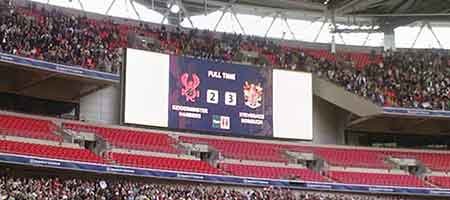
Stevenage have won at Wembley and ultimately reached the Football League. There have been promotions, relegations, cup runs, and escapes. There is also the mundane reality of thousands of ordinary matches that only become significant when seen within a lens of something bigger. The 2026-27 season adds another chapter. And, whatever happens between now and May, you can rest assured that every appearance, goal, card, win, and defeat will become another small part of Boro’s history.
We’ll be recording all of them.